
Oil Spill Contaminants in our Seafood:
How much do we know?
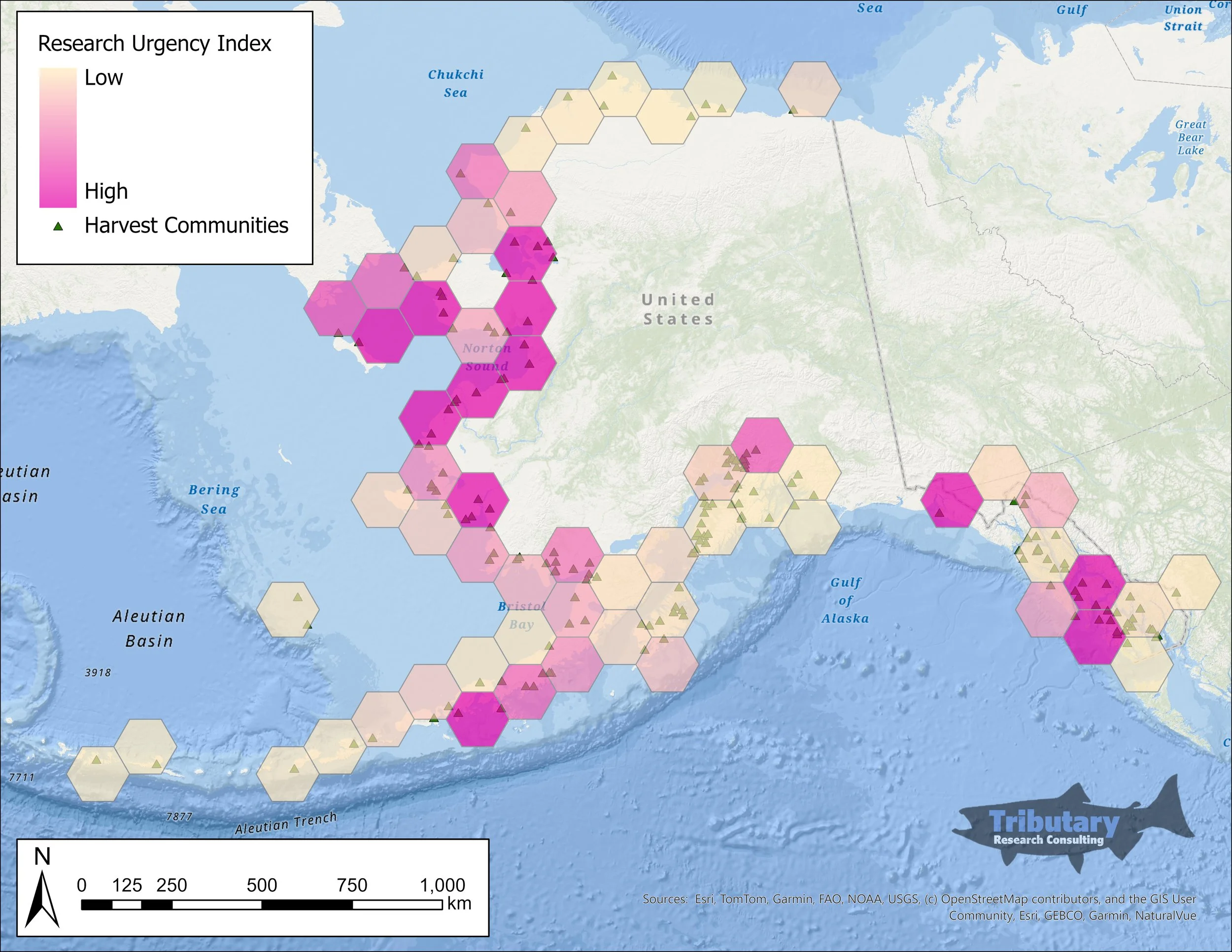
Understanding where, when, and how much oil contaminants are found in marine subsistence species is a critical part of protecting both environmental and community health.
Together with the Oil Spill Recovery Institute based in Cordova, Alaska, Fjord & Fish Sciences worked to gather all available data on hydrocarbons in marine subsistence-harvested organisms. Morgan and her team explored federal, state, and regional databases; interviewed contaminant, oil spill, and environmental health experts across the State; and mined grey and reviewed reports to perform a meta-analysis to identify gaps in baseline knowledge. Morgan also prepared a recommendations report to serve as a guide to filling the identified data gaps.
Click on the Report Thumbnails below to view the entire document.
In Alaska, marine fish, shellfish, seabirds, marine mammals, and marine plants are harvested for food, culture, and way of life. However, these same foods face risks from hydrocarbon contamination due to marine oil spills - from disasters like the 1989 Exxon Valdez, 2004 Selendang AYU, and 2022 Tug Western Mariner oil spills.
Oil contaminants can build up in marine organisms, where they can affect growth and reproduction, even survival. When these species are harvested and eaten, the contaminants in these organisms may impact the people who consume them.
Hydrocarbon baseline Monitoring Report published in September 2025

Supplemental Information for Baseline Report published September 2025
Hydrocarbon Monitoring Recommendations Report published September 2025
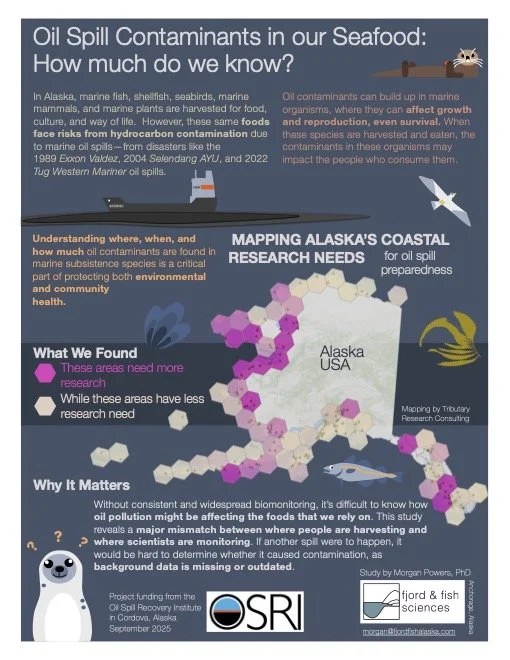
One-page Infographic
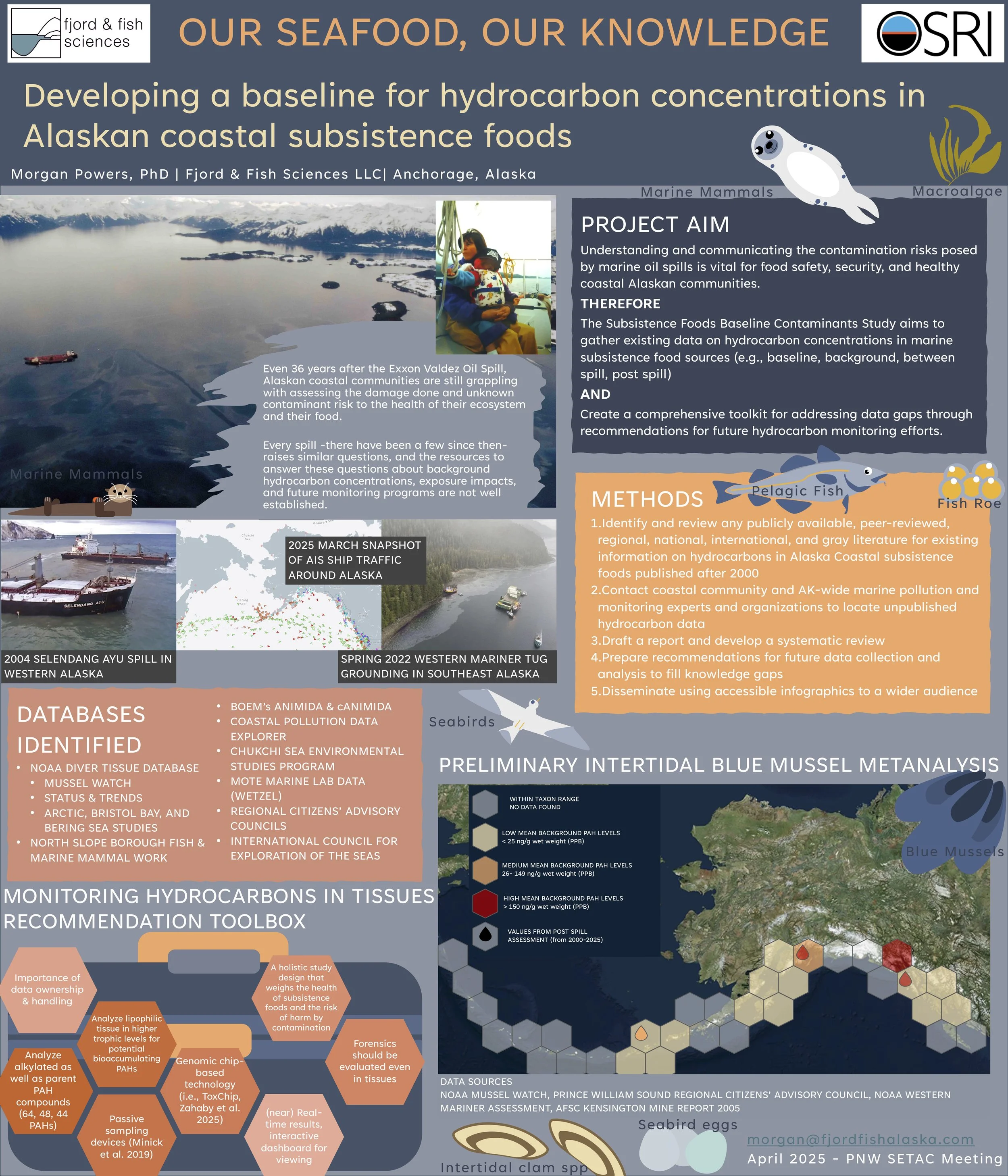
Poster presented at the 2025 SETAC Pacific Northwest Chapter Meeting